I was twelve years old when I watched my first handball game on TV. It was a quarterfinal in the Swedish Championship between Hammarby IF and Eskilstuna GUIF. GUIF had to win or face elimination. There was one player on the GUIF team, in particular, who caught my attention. He was only seventeen years old at the time, yet he completely dominated the game. He scored twelve goals and seemed to do exactly what he wanted on the court. His performance absolutely blew me away. I remember that I was no longer sitting on the sofa anymore—I had climbed onto the table to get a closer view because I simply couldn’t believe what I was seeing. His winning mentality, his focus, his confidence, his presence—all made him stand out. He was there to win, and he made sure no one underestimated him simply because he was the youngest player on the court. He was the best; everyone else just had to accept it. If there is such a thing as the “it factor,” he definitely had it.
His name was Mattias Zachrisson.
I wanted to be just like him. I wanted to become the best just like him. Be the one who rules. I
started following his career closely and watched all his games. But this was back in the day when
few Swedish top-league games were televised or available online, so I had to watch his games
through grainy web streams from the local newspaper E-kuriren. Unfortunately, his home court was
too far away from me; however, I took every opportunity I could get to see him play. Whenever he played
in the south, I would go with my dad to watch his games. When I played in the Skadevi Cup as a
thirteen-year-old, he was also playing there with the juniors. However, he was playing in the big
arena in the center, and we were playing in school gyms outside of the city. But if we made it to the
final, we were also going to play in the big arena, and then I could watch him play. We made it to the
final and I remember how I sneaked away from my team to watch him play. My wish was to watch him
play on his home court in Eskilstuna, but I never got to do that. When I was seventeen, he left
Sweden to play professionally in the Bundesliga. After seven years of playing professionally, he had to
end his career prematurely due to a shoulder injury. He came to mean a great deal to me at the
beginning of my career because he was the one who inspired me to want to play handball
professionally.
I’ve had incredible support from my family when it comes to my athletic ambitions. They have always
believed in me, encouraged me, supported me, and stood by my side. They never put unreasonable
pressure on me. Quite the opposite—they always tried to ease the pressure I placed on myself.
When I was thirteen years old, I played in the Swedish Handball Championship with girls who were
older than me. The Championship consisted of five stages, with the final stage bringing together the
eight remaining teams to compete for medals. At the time, we were competing in the third stage.
My oldest brother and his girlfriend had decided to come along and cheer me on. It was an early
start, and I remember them sleeping in the car between the games. Right before the game was
about to start, they stumbled into the arena, barely awake. My brother spent the entire game
jumping, screaming, singing, and cheering. There wasn’t a single person in the arena who couldn’t
tell he was my brother. He had enjoyed watching me play so much that he decided to come back for
the fourth stage as well, which was being played on our home court. That weekend also happened to
be his birthday. During the first game, I was named player of the game and received a T-shirt as a
prize. Later that evening, my brother showed it off to all his friends. There was no doubt that he was
very proud of his little sister.
But my biggest supporter has always been my mom. The following year, we reached the final stage of
the Swedish Championship. I was playing with a two-month-old ACL injury. My mom had begged my coaches not to play me, but they didn’t listen. In the final game, I twisted the same knee again. I remember lying on the court, screaming, writhing in agony. It was completely silent throughout the entire arena—apart from my screams. The very thing everyone feared could happen had just happened. My mom ran from the stands onto the court and helped carry me off. Afterwards, in the dressing room, I was devastated. I didn’t speak; I just sat there staring at the wall. My mom showered me, dressed me, and brought me crutches. Then she looked me in the eyes and said, “We are going to get through this as well.” In addition to my ACL injury, I had now also damaged the ligament on the inside of my knee. I wasn’t just back on square one in my rehabilitation. I was on square minus one hundred.
It wasn’t months of rehabilitation waiting for me—it was years.
One day, while I was attending a physical therapy session, an older man approached me. I had
noticed him watching me from time to time, but it hadn’t really bothered me. He told me that he just
wanted to say how impressed he was by my hard work and how it inspired him. He said he often saw
young people come into the clinic with their phones in their hands, barely finishing their exercises.
But whenever he watched me train, I gave everything I had in every single exercise. If I lost my
balance or fell, I got back up and kept going until I succeeded. We talked for a while about our
injuries, and he told me he was a sports teacher at a school. Before we parted ways, he said he
hoped to see me back on the court soon; he wished me good luck with my rehabilitation and told me
that he was rooting for me. His kind words affected me more deeply than I expected. I had to lock
myself in the bathroom for a few minutes just to compose myself before I could finish my workout.
The fact that a complete stranger had noticed me, acknowledged my hard work, and sent me off
with good wishes meant more than I could put into words. In my opinion, inspiring someone else is
one of the greatest compliments a person can receive. It is one thing to have the support of your
family. It is something entirely different to receive that same support from a stranger.
When I made my debut in Allsvenskan at eighteen years old, I managed to do a great game. I was relieved because I had been terribly nervous before the game. Afterwards, all I wanted was for my coach to finish talking so I could go see my family. When I finally came out of the dressing room, they were all there waiting for me. My youngest brother came running toward me, lifted me into the air, and spun me around. Sharing that special moment with my family, feeling their pride and happiness, will forever remain one of my fondest memories from my athletic career. They were the ones who had witnessed firsthand all the blood, sweat, and tears it had taken for me to reach that point.
Last year, my mom managed to convince my five-year-old nephew to come with her and watch me
play. I remember him sitting in the stands, waving frantically at me and jumping up and down. It was
my first game in a very long time after struggling with severe illness, and it was his first handball game
ever. He made it through about half of it. The other half he spent watching tractor videos on my
mom’s phone, taking countless toilet breaks, and convincing my mom that they were in dire need of
some fika. Still, the fact that he had come voluntarily—and even remembered the colors of our
jerseys—felt like a small victory. Not long ago, my entire office came to watch one of my games. The
next day, the intern told me she had enjoyed it so much that she wanted to come to my next game as
well. She even brought some of her family members with her. I was so genuinely happy when she
told me she wanted to come again—not because she liked handball, but because she wanted to
support me. There is something incredibly special about looking into the stands and seeing friends
and family cheering for you: crossing their fingers and hoping you will perform well. Sharing your
happiness when you succeed and your disappointment when you don’t. Their love for you is
unconditional—it doesn’t change whether you give a good performance or a bad one.
It’s no coincidence that many of the world’s most admired people are athletes. They possess
qualities worthy of admiration: dedication, discipline, courage, resilience, determination, and both
mental and physical strength. They represent what is possible when talent meets hard work. They
embody perseverance, resilience in the face of adversity, and the ability to turn dreams into reality. For many people, athletic stories become sources of inspiration and motivation. Athletes are often placed on pedestals,
almost treated like superheroes. The more successful you become, the larger the audience grows, and with it, the number of people who admire you. Suddenly, it’s not just friends and family filling
the seats in the stands. The audience is now made up of people you’ve never met, people who know
you only as an athlete. Many of them care only about your performance. When you perform well,
they love you. When you perform badly, they hate you. They don’t care that underneath the game
jersey and the gear, there is a human. The more successful you become, the more dehumanized you
risk becoming; the more you risk being reduced to what you do rather than who you are. People
know your achievements, but only fragments of your story. Sometimes it’s easy to criticize an
athlete’s performance. It’s much harder to understand what it takes to consistently perform at a high
level. Training, sleep, diet, rehabilitation, stress management, sacrifices, and the relentless pursuit of
improvement.
But among all those critical voices in the crowd, there are also people who genuinely care. People
who look forward to watching you play. People who feel inspired by your performance and motivated
by your journey. People who celebrate your victories and share your heartbreak when things don’t
go your way. People who support you through both the good and the bad days. Through injuries and
illnesses. People who believe in you when you doubt yourself. People who remind you of your
strength when you can no longer see it. People who develop a genuine affection for you and want
nothing more than to see you succeed.
And you have no idea they even exist.
In the world of sports, fans are not just watching from the sideline. Many develop profound, one
sided connections with their favorite athlete, known as parasocial relationships. These relationships
go beyond cheering and rooting for an athlete. They are built on admiration, a sense of belonging,
and emotional investment. A parasocial relationship describes a bond that a fan forms with an
athlete who may come to feel like a close friend, mentor, or source of inspiration. The fan feels
connected to the athlete, while the athlete remains completely unaware of the fan’s existence.
Despite the lack of reciprocity, these connections can feel very real. They can be comforting,
motivating, inspiring, and meaningful. They are not inherently bad or unhealthy. Like many things in
life, they become problematic only when boundaries are crossed.
In many ways, they are a form of escapism.
I believe escapism often carries a negative connotation. People tend to view escaping reality as
something unhealthy or irresponsible. But that isn’t always the case. As long as it doesn’t become all-consuming, escapism can be beneficial. It can provide comfort, inspiration, hope, and a temporary break from life’s challenges. That’s why we read stories, and it is also why so many of us love sports. Athletes
have incredible stories to tell, and people are drawn to their stories because they reflect something
deeply human. We can see ourselves in them. But the beauty of sports extends beyond the stories
themselves. There is also artistry in sport. The timing of a perfectly executed handball save is an art in itself. The physical mastery developed through years of practice. We marvel at what a human is capable of
achieving: the resilience to return after a devastating injury, the courage to perform
under immense pressure and the determination to keep going even when you risk public humiliation.
I’ve always found great inspiration in the world of sports. More than anything, I love watching people
succeed. Behind every success is a story with a happy ending. I can barely watch the Olympic Games
without tearing up. Seeing the athletes achieve the dreams they’ve dedicated their lives to pursuing
is incredibly emotional. It’s just as emotional to watch those who come heartbreakingly close, only to
fall short at the finish line. Knowing how much work, discipline, and determination it takes to
compete among the best makes both victory and defeat incredibly moving. Sports have always been
a big part of my life. I come from a sports-loving family, and my hometown Helsingborg has a proud
sporting tradition. Handball, evidently, has a special place in my heart. I enjoy watching both men’s
and women’s handball at every level. My favorite female player has always been Daria Dmitrieva,
the Russian playmaker. As a goalkeeper, however, it should be illegal not to mention Katrine
Lunde and everything she has done for the sport. I don’t think there will ever be another goalkeeper
who will reach her level of greatness.
But my favorite handball player is of course, Andreas Palicka.
How do you even begin to describe Palicka? His winning mentality. His attitude. His charisma. His
character. His personality. There is truly no one like him. I sit in front of the TV and I scream every
time he saves a shot. He is a national treasure—loved by his people, truly irreplaceable in the
Swedish national team. He writes the best kind of stories. When you think it’s over and there is no
coming back, he delivers an unforgettable performance. In the most spectacular way possible, he
brings his team back into the game. Palicka plays with a big heart, immense passion, and an unwavering determination to always give his best. He has all the qualities that make you fall in love with an athlete.
Football has also played a significant role in my life. Both of my brothers played football, and I often
went with them and my dad to watch our local club, Helsingborgs IF, play. While I can appreciate the
incredible athleticism and skill of football players, I have often found it difficult to connect with and
root for them. The issue is not necessarily the players themselves, but rather the football culture and
environment that surrounds professional football. But when I was in Egypt, I encountered countless
young boys who spoke about Omar Marmoush with genuine admiration. Omar is no Lamine Yamal or
Jude Bellingham. Omar represents something many people can identify with: persistence. His story is
a reminder that patience is the key to success, and you can’t beat a person who refuses to give up. You must continue to work hard even when no one believes in you. What is also impressive about
Omar is the way he always seems to celebrate the success of his teammates. There is no sense of
competition for attention or recognition—only genuine happiness when those around him succeed. He reminds me of a quote:
“The sun and the moon don’t compete; they shine when it’s their time.”
I watched my first ice hockey game live when I was eleven years old. The father of one of my closest
friends had a season ticket to Rögle, and every now and then we would join him. I really enjoyed it,
and ice hockey immediately became one of my favorite sports. My brothers watched football during
the summer and then ice hockey during the winter. Sometimes, they would allow me to come along if
there was an empty seat in the car. Sweden has always been a hockey-loving country, and we have a
long tradition of producing great ice hockey players. Every year for as long as I can remember, it has been a tradition to watch the World Junior Championship during Christmas break. Every year, no matter where we were, the television was always on—day or night—and everyone gathered to watch Sweden play.
The last World Junior Championship took my life on a truly unexpected path. The day after Christmas
Eve, I got sick and spent the entire holiday break wrapped in a blanket on the sofa. There wasn’t
much I could do besides watch movies and, of course, ice hockey. You could tell early on that
there was something special about the Swedish juniors this year. After they had dismantled the US in
the group stage, I remember telling everyone that Sweden was going to win. (I really did say this.) Of
course, no one is going to believe me now since they actually did win, but I promise I did say that.
This team had something special, something no other team had had before:
Jack Berglund.
There were many stars in the Swedish team: Frondell, Björck, Eklund, Stenberg. But the one who
shone the brightest, the player who left the biggest mark, was definitely Jack. With his attitude,
character, energy, charming personality, willpower, leadership, winning mentality, conduct on and off
the ice—I could go on forever. The way he stepped up when he was needed the most. I had never
encountered an athlete who left such a strong impression on me in so many ways. This was his team
and he was leading it to victory. His performance was mesmerizing to watch. Throughout the
tournament, people praised his performance endlessly. People were writing that he was the most
valuable player of the century, the captain of the captains, the role model of the role models. One
person wrote that he was the heartbeat of the team. I couldn’t have described it better myself. He
deserved all the praise he was receiving. I have never encountered an athlete with so many lovable
qualities. He is the hockey version of Palicka. His passion and love for the sport permeate every stride
he takes on the ice. You could also tell what an incredible team player he is. The kind of player you can rely on when you need him the most. The one who takes responsibility and never gives up. The one you build a successful team around: the heartbeat of the team.
Jack charmed the entire Swedish hockey world and captured many hearts. I can’t tell when or how—which interview or game it was—but at the beginning of the new year he had captured mine as well.
Ever since, he has been my favorite and one of my greatest sources of inspiration.
When I imagined what 2026 would look like, it certainly didn’t look like this. The first thing I did was
buy an expensive hockey subscription so I could watch all of his games. His home arena was too far
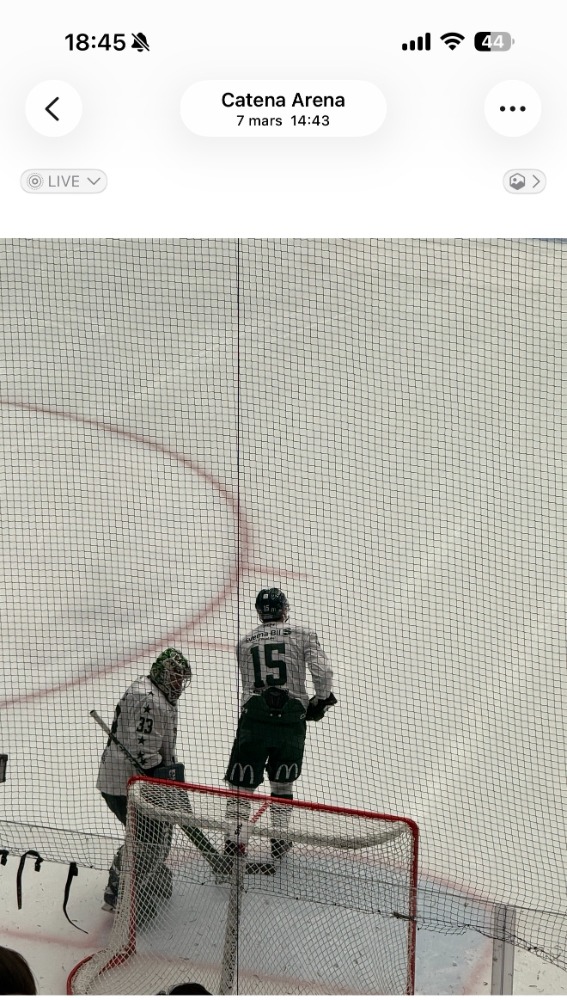
away from me, but when I saw that he was going to play in Ängelholm on March 7, I decided that I
had to take the opportunity and watch him play live. However, first, I needed to find someone to
go with me because I didn’t want to go alone. I had someone in mind, but he wasn’t sure whether he
could go, so I had to wait for an answer. I also saw that the juniors were going to be honored for
winning gold during a senior national team tournament in Ängelholm in May, so I bought tickets as fast as I could.
Since I had started working at the law firm, my days had become extremely long. I would leave work
and drive straight to handball practice. When I got home in the evening, I usually spent a few hours
studying languages. But after the tournament, when I came home in the evening, I preferred to
watch Jack play hockey rather than study. And more than anything, I was counting down the days
until March 7.
While Jacks season was in full swing, so was mine. Sometimes, after a game, my knee would get really
irritated. It would swell, and I would have trouble fully bending and extending it. Normally, after a
day of rest and rehab, it would go away, so it never concerned me too much. But after my fifth game
last season, the pain was excruciating. The swelling and irritation were unlike anything I had
experienced before. I thought it would get better after a day of rest, but it didn’t. It took ten days
before I could fully bend and stretch it again, which was long enough for me to get seriously
frightened that I could have played my last game ever. I remember thinking that I had fought so hard
for so long; it can’t end like this. Will I never again put on the game jersey, high-five my teammates,
throw my hands in the air after a save, or celebrate in the dressing room? Will I never again do the thing I love the most? I asked for a happy ending to this story. My world of sports has been gloomy. I’m not going to
sugarcoat it. I’ve experienced severe bullying by teammates, abuse by coaches, life-threatening
illnesses, and career-threatening injuries. It took me three years to come back from my knee injury. It
took me five years to come back from my illness. But I have always come back. In one way or
another, I always come back. I don’t care what I must endure in life as long as, in the end, I get my
happy ending. I am not quitting until I get my happy ending. Each time I step onto the court
for a game, I touch each side of the goal, I close my eyes, and I say—“Thank you for letting me be
here.” I am so unbelievably grateful that, despite everything I’ve been through, I still get to be an
athlete and do the thing I love the most. I still have a lot of hope in my heart that there is a happy
ending waiting for me. I have decided that it doesn’t matter how painful it gets, or the adversity I will
have to face: I will not give up. I won’t stop until I have reached my goal. But sometimes, the journey
toward the happy ending can feel lonely and daunting.
Watching Jack play did something to me. It was comforting, motivating, inspiring, and meaningful. He
provided me with vicarious success. For a moment, I could escape my own world and enter his. Then I
was no longer at the end of a story; I was not writing the last chapters of a story filled with injuries,
illnesses, abuse, and heartbreak. Instead, I was standing on the starting line once again. Ready for a
new adventure. And there was hope. So much hope for a story different from my own. A story filled
with success, friendship, belonging, growth, and adventures. I seek solace in the blank pages left to
be written. And maybe on these blank pages, I will find someone who will instill a sense of
hope. It doesn’t have to be much; only a glimmer of hope would suffice. I just need something to
hold on to in moments of doubt. Because I have not yet reached the point where I would be able to
forgive myself for giving up on my own story. I cling to someone that inspires me, motivates me,
encourages me, makes me believe that the final chapters of my story are worth fighting for. That they
will be the best chapters yet—better than I could ever imagine.
March 7
The person I had originally asked to come with me couldn’t make it. By the time I started looking for
other alternatives, all the seated tickets had sold out. Only standing tickets remained. But I wasn’t
about to miss my only opportunity to see him play live. Eventually, I found someone willing to come
with me, and we bought the tickets. I had been looking forward to that day for months. We arrived
early and managed to secure a great spot in the middle of the crowd. Well, at first, it felt as if it was a
great spot, but then the arena started to fill up. Have I mentioned that I am both claustrophobic and
agoraphobic? Suddenly, I found myself surrounded by people on all sides. The crowd was so dense
that people were pressed up against me from every direction. I was trying to focus on my breathing,
but the smell of alcohol and sweat didn’t make it easier. There was also an older man standing right
behind me who seemed determined that the purpose of his life was to attain hockey games and
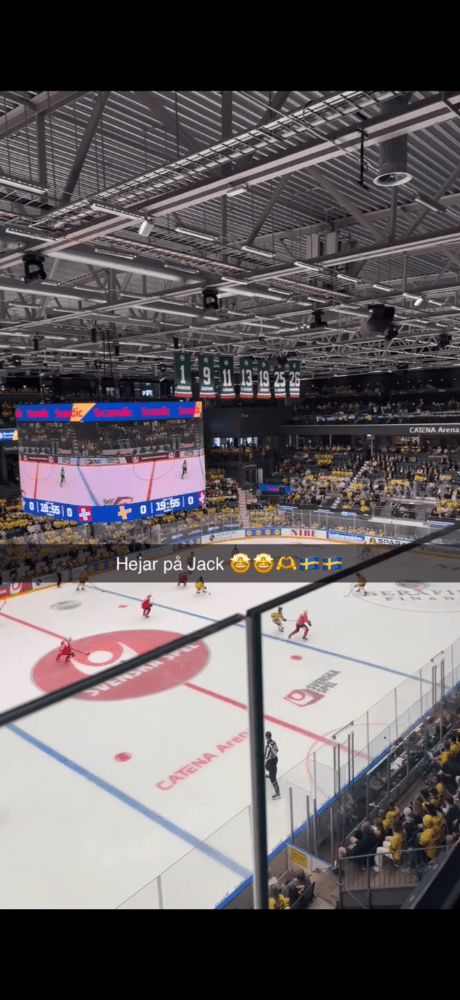
shout obscenities every chance he got. Sports really do bring out the best and the worst in people. Halfway through the first period, I was reminded why I don’t stand in one position for too long—my knee absolutely hates it. At this point, my knee was aching, my ears were bleeding, and my breathing was heavy. The first period felt endless. There was a lengthy video review after a collision with the goalkeeper. By the first intermission—nearly an hour later—my knee was so swollen and irritated that simply making it down the stairs was a challenge. I was desperately in search of a place to sit down and rest my knees. The worst part was that I had an important game myself just two days later. Since I had to go and sit down to rest for the whole intermission, we came back up too late: someone else had taken our spot, and we had to find a new one. We managed to find a spot where we could at least see half of the ice, but only a few minutes later, this very tall guy decided it was a good spot to stand right in front me. Since I was too shy to speak up, I didn’t see much of the second period. But at the end of the second period, Färjestad had built such a comfortable lead that many spectators decided to leave early. I then managed to find a seat so I could sit down for the third period and rest my knee. I can’t tell if this was an absolutely terrible experience or if this was exactly
how hockey should be experienced. Although it was much more painful than I had imagined, it was
still a bit magical to see him play live.
His team had endured a rollercoaster season. It hadn’t started well, but toward the end things were
finally beginning to turn around. I found myself hoping that Rögle and Färjestad would both make
the play-offs and, somehow, end up facing each other, so I could get another chance to watch Jack
play. With only two rounds remaining, I was following the standings thoroughly. I was calculating
playoff scenarios, trying to figure out which teams needed to win and which needed to lose for
Rögle and Färjestad to meet in the quarterfinals. I had not done that much math in years. In the end,
everything fell into place. Jack scored three goals in the final stretch of the season, helping secure
the results I was hoping for, and bringing him right back to me. The first quarter-final games occured
around my birthday. When my family asked me what I wanted as a birthday present, of course my
answer was: “Tickets to see Jack play.”
What more could I possibly have asked for?
I couldn’t have imagined a better way to celebrate my birthday. Before the game, my mom leaned
over and asked, “who’s your favorite?” I pointed to the ice and said, “Number 15—that’s my favorite.” The
quarter-final series between Färjestad and Rögle was one of the wildest I’ve ever watched. Färjestad
won the opening game away from home, then the second game—the one we attended—in the most
dramatic way possible. Rögle had built a 5–0 lead, only for Färjestad to complete an unbelievable
comeback, equalize the game, and eventually win 6–5 in overtime. Färjestad then won the third game
as well and suddenly led the series 3–0. They needed just one more victory to reach the semifinals.
One of my closest friends is a devoted Rögle supporter. She was spending Easter in Helsingborg, and I
had asked her whether she wanted to attend a game with me if the opportunity arose. After three
consecutive losses, there was little reason to believe Rögle would, against all odds, manage
to win the fourth game. Before the fourth game, I was texting with my friend, and she told me that
even if they won, they still sucked so badly that she didn’t want to watch them. She was terribly disappointed with their previous performances in the quarterfinals; she didn’t think they were worth watching. I tried to convince her that it would be a fun experience anyway, doing everything I could to persuade her. I was contemplating whether I should go anyway, even if I had to do so alone. I really did not want to miss out on an opportunity to watch him play. Rögle did the impossible and won. After the game, I
saw a message on my phone from my friend: “BUY TICKETS!!!!!!!!” The tickets sold out within
minutes, but I stayed awake, ready for the release, and managed to get us two tickets. Rögle won
that game as well and managed to keep the quarterfinals alive.
Two days later, Game 6 was set to be played in Karlstad. My friend and I had decided to watch it
together, but we didn’t know where. Our original plan was to find a sports bar, but at the last minute,
my dad pointed out that HIF would be playing at the same time. Finding a sports bar willing to show
hockey instead of football seemed unlikely. Then my friend’s parents invited us over to watch the
game at their place. Little did I know that I had been invited to the headquarters of Rögle’s most
devoted supporters. As we walked up the driveway, I noticed Rögle stickers on the cars and under a
registration plate. Before we entered the house, my friend turned to me and said:
“By the way, I don’t think it’s a good idea to tell anyone that your favorite player is on the other team.”
I thought she was joking.
She wasn’t.
I was sitting there on the sofa thinking I must not divulge my true colors. That my heart is green and
white, but also white and green. A cheer at the wrong moment could potentially expose me. I
suppose this is the closest I will ever get to a forbidden love story. If he scores, I must bite my tongue.
Fortunately—for my safety—he didn’t. Rögle won again. The series was now tied 3–3 and a decisive
Game 7 was going to be played in Ängelholm two days later. My friend turned to me immediately
after the final buzzer and said:
“Let’s buy tickets!”
She said it with such certainty that it sounded less like a suggestion and more like a command.
My response was:
“Sure, I’ll just eat noodles and drink water for the rest of the month.”
Unfortunately, or perhaps fortunately for my bank account, the tickets sold out before they were
even released to the general public. Rögle won again. They had completed the impossible,
overturning a 0–3 deficit to win the series 4–3. The disappointment was immense. It felt like such a
cruel ending to an incredible season for Jack. Was it really going to end like this?
Nope.
Just a couple of days later, Jack signed his entry-level contract with Philadelphia Flyers and flew to the
US to finish the season in the AHL. He played five games and I thought he did great. But in my eyes,
he is always the best. The smaller rink seemed to suit him well. I actually missed the penalty
shootout because I fell asleep. In hindsight, that was probably for the best. If I had watched it live, I
would have been so nervous—I probably wouldn’t have been able to fall asleep afterwards. His team
didn’t make it to the play-offs, and I thought: Okay, now the season must be over?
Nope.
Just a few days later, Jack was selected for the Swedish senior national team for one of the World
Championship warm-up tournaments. Sweden would play one game at home before traveling to
Czechia for two more. Three months earlier, my mom and I had booked a weekend trip to Prague.
What were the odds that it would coincide perfectly with the tournament and that Sweden’s games
would be played just ninety minutes south of Prague?
A coincidence? I don’t believe in coincidences.
It was definitely meant to be. I was going to see him play for the national team in Czechia. (Or at least
so I thought). There was just one obstacle standing in my way: my traveling companion, who had not
signed up for a Prague weekend expecting to spend part of it watching hockey. I had compiled an
impressive list of reasons why dedicating one day of our trip to hockey was an excellent idea. I had
researched nearby attractions and excursions, determined to make my case as persuasive as
possible. To my surprise, I didn’t need any of it. She agreed readily. In fact, she was genuinely excited,
although not quite as excited as I was to see Jack play for the national team.
I was counting down the days until I was going to see him play again. Then, the day before the game,
Sweden played against Czechia, and Jack didn’t return to the game after the first period. I spent
the entire evening searching for information, trying to find out what had happened, but I couldn’t
find anything. No injury update. No explanation. Nothing. Not knowing what had happened caused me
far more distress than I’d like to admit.
I spent the morning as well searching for updates on Jack. Nothing. Since we were going to be
out all day, I had left my phone in the hotel room charging while we ate breakfast. When we
returned, the clock was already 08:40 a.m., and we were supposed to pick up our rental car at 09.00. It
was probably around this time that I started to feel a bit stressed. My mom, on the other hand,
doesn’t know what that word means. When I suggested that we probably should hurry, she assured
me that everything was fine: “The car is already paid for—if we are ten or fifteen minutes late, it won’t
matter. The game doesn’t start until noon anyway.” We decided that it was the best option to book an Uber directly to the rental office. I had asked my mom several times whether she had ordered one yet. She answered me that it only took a few minutes and she wouldn’t order until she was finished and ready to leave. At this point, I had to actively resist the overwhelming urge to strangle my mother. I love her with all my heart—she is my best friend and my biggest role model—but nobody gets on my nerves quite like she does. At 09:00 a.m., we were finally ready to leave and opened the app. Earliest arrival was 09:12. Fine. Not ideal, but manageable.
We went down to wait for the Uber in front of the hotel. But then, out of nowhere, the Uber canceled.
We noticed another man waiting nearby. He overheard our conversation and asked whether we were
trying to get an Uber. He told us that it was the Prague marathon and large parts of the city had been
closed off, making it extremely difficult for drivers to get through. He then kindly showed us which
metro to take and explained the fastest route to the rental office. We had absolutely no idea it was
the Prague marathon that day. I mean, there were signs. For example, the thousands of people
in running T-shirts we had encountered during the previous days of our trip.
Anyway, by then it was 09:15 and we were on our way to the metro station. We had to change trains
once but managed to reach the car rental around 09:40. There was only one person ahead of us in
line, but at this point every minute felt critical. Then, in a sudden stroke of serendipity, the man got
an important phone call and stepped out of the line. At 10:00, we finally jumped into the car and left
Prague. If everything went according to plan, we would arrive in České Budějovice around 11:40,
leaving us roughly twenty minutes to park, find the arena and make it to our seats. As the designated
co-pilot, I had one important responsibility: making sure that we took the E55 exit toward České Budějovice.
Unfortunately, somewhere among Prague’s beautiful buildings and my increasingly distracted thoughts, I completely forgot my very important assignment. One second before we passed it, I suddenly realized: that was our exit. Our little detour cost us roughly ten minutes. Ironically, despite the stressful morning, if I hadn’t missed the exit, we actually would have made it to the game in time.
I had already seen on the lineup that Jack was not going to play. But I was still hoping that he hadn’t
left the team—that he would still be present in the arena. We arrived five minutes late. Don’t ask me
if it was a good game because I don’t know, I didn’t watch it. I spent the first fifteen minutes
searching through the crowd, trying to find him, but I couldn’t. The longer I searched, the more
dejected and despondent I became. I even felt my eyes tearing up. Did I go through all the trouble
just for this? This was what I had been most excited about during the entire trip—what I had been longing for the most. And now I wasn’t even going to see him? I kept searching through the crowd for him, and then all of a sudden, I saw someone that I suspected might be him—but I wasn’t sure.
Here comes the part where I almost lost my dignity.
Because there I was in České Budějovice, climbing over seats to get a better view. Zooming in with
the camera on my phone. Playing with the boundaries of what is considered socially acceptable
behavior. Surrounded by Czech hockey supporters who were curiously staring at me, probably
wondering whether I had ever been to a hockey game before. I love the Czechs—they are my kind of
people. I just smiled at them. I get away with a lot by just smiling. When I smile at people in Sweden,
not many people smile back, since Swedes think that eye contact can be fatal. But when I smile at the
Czechs, they smile even wider back at me. Anyway, there he was, two sections away from me—and
just his presence soothed my distress. It made me feel like it wasn’t all for nothing. It felt like a small
consolation that I at least got to see him. He was so close and within reach. I had the perfect
opportunity to walk right up to him.
But I didn’t.
It just hit me out of nowhere: how foolish I felt. I moved a bit closer and then I just sat there and
looked at him from a distance. Which didn’t make me feel less foolish, but what was I supposed to do?
Ask him for a photo? Or whatever people do these days when they meet someone they admire. Tell
him how much he inspires me? That he paints color into my gray world? Why would he care what he
means to me when I mean nothing to him? I am just another face among many. I reminded myself
that he didn’t know me—and I didn’t know him either. Even if I, on some parasocial level, sort of felt like I
did, I didn’t. If I had approached him and we had interacted, shared a conversation, looked into each
other’s eyes, then suddenly he would be real to me. I would be real to him. I decided in that moment
that I didn’t want to meet him; I didn’t want him to be real. I wanted him to remain my favorite
character, the one I return to whenever I need inspiration, or when I need an escape from my own
story. And that’s it.
It was at this moment, while I was sitting there looking at him and realizing what it meant to me to
just see him, that I understood what he represented in my life: this stranger who has absolutely no idea that I even exist. Who would have just looked right through me. When this turmoil of emotions hit me, I realized
something I should have realized much earlier when I made my family celebrate my birthday
watching hockey; when I decided to wake up in the middle of the night on a weekday to watch him
play in AHL; when I decided to skip handball practice to watch his game; when I decided to stand up
for over an hour in complete agony just to get a better view of him on the ice; when I decided to
sneak away from my nephew’s birthday party and hide in a closet to watch his goal.
I had turned reality into fiction.
I had become so invested in somebody else’s career that I had completely forgotten about my own.
Cheering for Jack had consumed me for months, and it had been good for neither my finances nor my
studies. All the time I spent watching hockey was time I normally would have spent studying. With
the amount of time I’ve spent watching hockey this year, I could have learned a whole new language.
This is just so typical of me—not knowing how to do something half-heartedly, not knowing how to
sort my priorities out.
I thought that now that Jack’s season was over, I could finally get my life back. I could just de-hockeyfi my
life, have a hockey-free summer, and then all my problems with escapism would simply solve themselves.
I thought the season ended right there in České Budějovice with an injury. But to my big surprise, he
got selected for the next pre-tournament as well. My hockey-free summer had to wait a little bit
longer. The next weekend the national team was playing in Ängelholm, and when I had bought the
tickets in January, I had absolutely no idea that I wouldn’t just get to see the juniors being celebrated
for their gold—I’d also get to watch Jack play. It felt like a fair compensation since I didn’t get to see
him play the previous weekend. There he was on the ice, and there I was somewhere in the crowd,
rooting for him, crossing my fingers so hard they became numb. I believed he had a great chance of
making the final World Championship roster. Although the team’s overall performance wasn’t great
in the last two games, Jack delivered what he always does: fighting spirit and a big heart. Qualities you
should never underestimate when assembling a team.
When the roster for the World Championship was announced, I was in court. I was just so curious to
see if he had made the team that I couldn’t wait until lunch, so I sneaked away and watched it live in the
restroom. He made the team and was going to play with and against so many great players, and
another month of my life consumed by hockey awaited me.
The day before the first game in the World Championship, my grandpa was diagnosed with four
blood clots in his leg and hip and needed emergency surgery. My grandpa means the world to me, and it
was quite traumatic for the whole family because we didn’t receive any information all day—we didn’t
even know whether he had survived the surgery. Mom and I had to go to Helsingborg to take care of
my poor grandmother, who was worried sick. When Jack played his first World Championship game, I
was at the hospital visiting my grandpa. We did watch the game later in the evening, and I remember
thinking that he was playing a little bit too well, which was not good at all. And then he continued
playing great in the following games.
Although the result of the tournament was a huge disappointment for the Swedish team, Jack did
great, received a lot of praise, gained valuable experience, and ended his season on a high.
However, it was a terrible ending to the season from my point of view, since I am hoping he will still
play in Sweden next season so I can go watch him play at his home arena. But if he continues playing like
this, I am getting seriously worried that I’m going to have to cross the Atlantic to watch him play live
next season, and that will definitely not be good for my finances.
Jack is the epitome of everything I love about sports. I am convinced he will continue to capture
many more hearts in the hockey world. I’ve had so much fun cheering for him. It’s been an
adventure. Thanks to him, we got to see the fairy-tale town of beautiful Český Krumlov, and I also
discovered a new castle in Hluboká that I need to add to my list of castles I must visit.
But now I am going to have a hockey-free summer, and find other ways of escaping my own reality.
Probably by writing and reading. In Prague we visited the Kafka Museum, and I bought
Metamorphosis and The Trial. I’ve already finished the first one, so now I’m going to find time to read the second one in between writing, working toward my goal, and creating my happy ending.


Lämna en kommentar